
Guide · Updated October 2026
Why Timber Stair Treads Turn Grey or Black (and How to Fix It)
Why wooden stair treads go grey, black, faded or yellow in Singapore homes, and how each kind of discolouration is fixed.
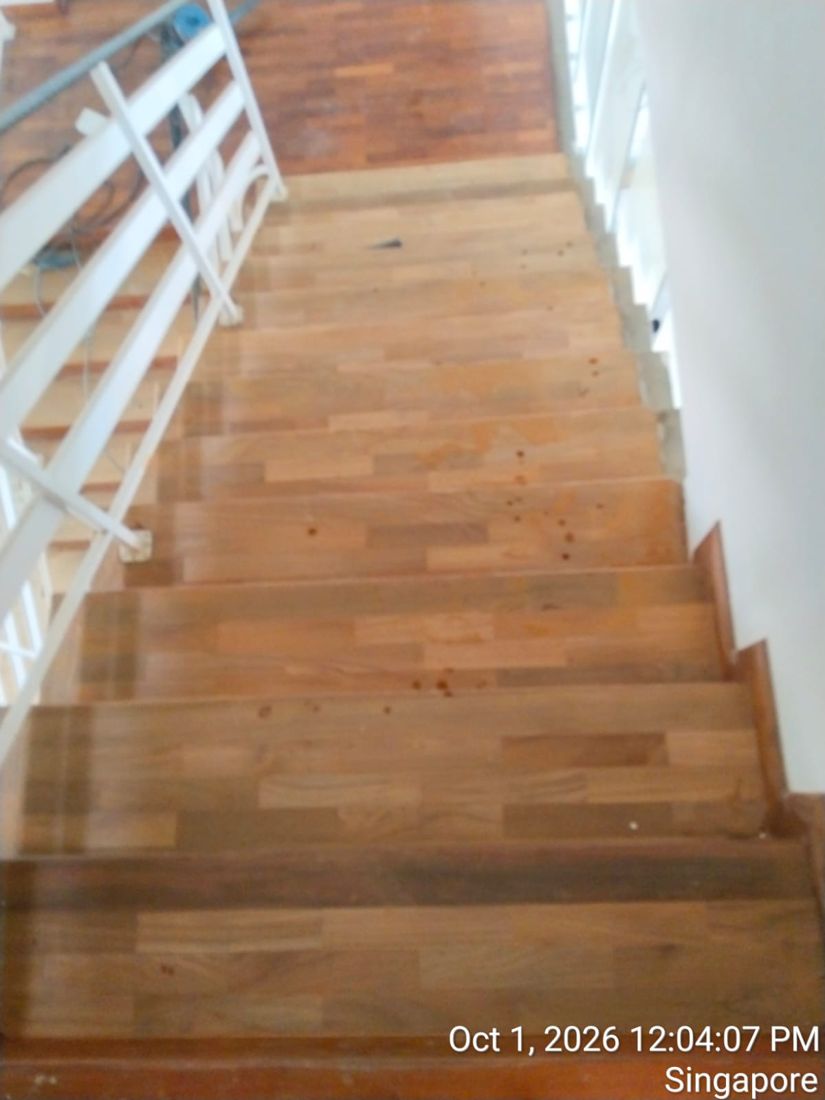
Grey in the middle of the steps
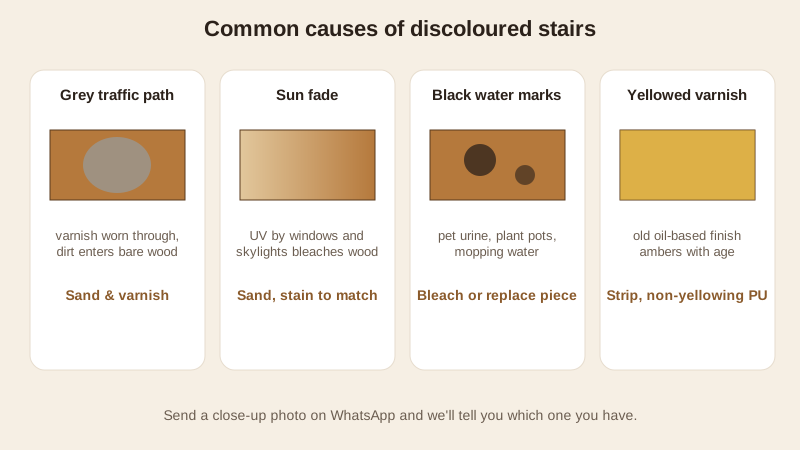
This is the most common one. The varnish has worn through on the walking line, so dirt and mopping water get into bare timber and turn it grey. The fix is a full sanding back to clean wood and fresh varnish.
Black rings and patches
Black marks are usually water reacting with the tannins in the timber: from plant pots, wet umbrellas, a leaking window or pet urine. Light stains can be bleached after sanding; deep ones go through the wood, so those pieces are replaced.
Faded steps near windows
Sunlight through windows and skylights bleaches timber over time, so the steps it reaches are lighter than the rest. After sanding, stain evens the colour out. UV film on the glass helps stop it coming back.
Yellow or orange varnish
Older oil-based varnishes turn amber with age. Sanding off the old finish and using a non-yellowing water-based or PU varnish keeps the natural colour of the wood.
What not to do
- Don't mop timber stairs with a wet mop: use a well-wrung cloth
- Don't use bleach or harsh cleaners on the varnish
- Don't paint over stains: they show through and the paint chips on treads
Related staircase services
Staircase Polishing
Buff, clean and re-varnish worn timber stairs in a day. From $350 per flight.
From $350 per flightWood Staircase Repair
Loose, creaky, broken or damaged treads and nosings repaired with matching timber.
From $350Broken Tread Repair
Cracked, split or missing pieces on stair treads replaced with matching timber.
From $350Dog-Chewed Stairs
Chewed nosings, claw marks and pet stains repaired and refinished.
From $350Scratch & Dent Repair
Scuffs, scratches, dents and gouges in timber stairs removed or filled.
From $350Discoloured Stairs
Grey worn paths, sun fade, black water marks and yellowed varnish restored.
From $350Sanding & Varnishing
For worn-through stairs: sanded to bare timber, sealed and varnished like new.
Quoted after inspectionParquet Staircase
Parquet and strip-timber clad steps and landings polished to match your floors.
From $350 per flightStaining & Colour Change
Walnut, dark or two-tone treads with white risers, tested on a patch first.
Quoted after inspectionWant your staircase fixed and looking new again?
Send 3 or 4 photos of your stairs on WhatsApp, including a close-up of the damage, and get a price, usually the same day.